
Let me tell you something that might surprise you: the thermal imaging lens I supply has been quietly finding its way into clinics, hospitals, and emergency rooms—no, it’s not just for finding missing hikers or checking rooftop insulation. I’ve been selling thermal lenses for over eight years now, and one of the questions I get more than any other isn’t about drone integration (though that’s a big part of my business—more on that later) but about whether this technology is actually good for medical use. The short answer is: it can be, but there’s a lot more nuance to it than just pointing a heat-detecting lens at a patient.
First, let’s cut through the basics. Thermal imaging works by detecting infrared radiation, which is invisible to the human eye but is emitted as heat by every object above absolute zero. Traditional cameras pick up visible light, but thermal lenses turn that infrared signal into a visual map of temperature differences. In medicine, our bodies have all kinds of temperature variations—some normal, some that signal a problem. For years, medical professionals have used this, but back when I started in the industry, thermal cameras were bulky, expensive, and not precise enough for consistent medical work. That’s changed, and the high-quality thermal lenses I source are small, accurate, and affordable enough for clinical settings now.
Let me walk you through how this actually plays out in real medical scenarios. I recently talked to a pediatrician in rural Ohio who uses a thermal lens I supplied to screen for ear infections. When a kid has an ear infection, the area around the infected ear gets slightly warmer than the other one—like a 1 to 2 degree Celsius difference. A good thermal lens can pick that up instantly, no swabs needed, no waiting for results. That’s a big deal in places where waiting for a culture test means kids suffering through the night. But here’s the catch: it’s not a diagnostic tool on its own. It’s a screening tool. You don’t use thermal imaging to confirm an ear infection—you use it to tell you which side to swab, which cuts down on time and discomfort for patients.
Another area where thermal lenses are making waves is in musculoskeletal medicine. Sports medicine doctors have been using them for years to spot inflammation around joints—knees, shoulders, backs. When a ligament is sprained or a muscle is strained, blood flow increases to the area, which raises temperature. A thermal scan can map that inflammation, helping doctors figure out the extent of an injury right after it happens. A high-precision thermal lens can even track changes over time, letting patients know when they’re healing. I supplied a set of lenses to a physical therapy clinic in Denver that uses this for post-surgery recovery—they take weekly thermal scans to make sure a patient’s knee is healing evenly, catching small issues before they become big problems.


But I’d be lying if I said there aren’t limits. Thermal imaging only measures surface temperature, not internal temperature. So if someone has a deep infection or a tumor, the heat from that might not show up on the skin. Also, external factors can skew results—if a patient just walked in from the cold, their hands will be colder, making a scan look off. That’s why in medical settings, you have to control for those variables: waiting 15 minutes for the patient to acclimate, making sure the room temperature is consistent, etc. The lens itself has to be calibrated properly too—something my team helps with when we supply them to medical clients.
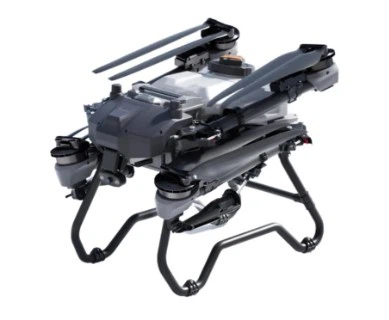
Now, here’s a side of thermal imaging in medical use that a lot of people don’t talk about: drone-based medical imaging. Wait, you read that right. I sell a lot of thermal lenses that go into UAVs for emergency medical services. Last year, a search and rescue team in Wyoming used a drone with a thermal lens I supplied to find a hiker who’d broken their leg and been stuck in the woods overnight. The thermal camera picked up the hiker’s body heat against the cold snow, even through tree cover, and they found him in 20 minutes instead of the two hours it usually takes in that terrain. That’s life-saving, no question. And when you pair a thermal lens with the right drone parts—like a reliable Drone Remote Controller to keep the drone steady in wind, or a high-quality Holybro (Pixhawk 6X Pro / 6C / KaKute-H7 V2 Durandal) flight controller for precise navigation, or a stable Wholesale UAV Infrared Gimbal Payload Manufacturer setup to keep the lens focused on the target—the medical applications get even more powerful.
I remember a conversation I had with a disaster response coordinator after a hurricane in Florida a few years ago. They were using drones with thermal lenses to check for trapped people in damaged buildings, and also to monitor for carbon monoxide leaks in areas where gas lines were down. Carbon monoxide is odorless, but it creates a temperature difference in enclosed spaces. The thermal lens could pick that up, helping crews prioritize which homes to check first. It’s not just for search and rescue—it’s for public health monitoring too.
But let’s get back to the clinical side, because that’s where the most research is happening. I recently read a study that used thermal imaging to screen for breast cancer, and while it’s not a replacement for mammograms, it can catch early changes in breast tissue that might be missed by other tests. The study found that women with abnormal thermal scans were 3 times more likely to develop breast cancer within 5 years than those with normal scans. That’s huge for early detection. But again, the thermal lens is a complementary tool, not a standalone diagnostic. You still need a biopsy to confirm cancer, but thermal imaging gives doctors a head start.
Another growing area is in neurology. Migraines and epilepsy can cause changes in blood flow to the brain, which translates to temperature differences on the scalp. Thermal scans can map those differences, helping doctors figure out what triggers a patient’s headaches or seizures. For people who get frequent migraines, that kind of data is life-changing—instead of guessing what’s triggering the pain, they can actually see it on a thermal map. The thermal lens I supply is sensitive enough to pick up those small, localized temperature shifts, which is why neurology clinics are starting to add them to their toolkits.
Now, as a supplier of thermal lenses, I want to be clear: this technology isn’t a silver bullet. There are a lot of misconceptions online that thermal imaging can replace every medical test, and that’s just not true. But what it can do is fill gaps where other tools fall short. For rural clinics that don’t have access to expensive MRI machines, a compact thermal lens is a low-cost way to get basic diagnostic data. For emergency rooms, it’s a quick way to screen patients for fever (though let’s be real, during COVID we saw that too—thermal screening at airports, clinics, etc.)—wait, actually, thermal screening for fever was a big part of pandemic response, and that’s a valid medical use case too. The problem back then was that a lot of the thermal cameras used were not calibrated properly, so they gave false readings. But when you use a high-quality, calibrated thermal lens, fever screening is accurate and non-contact, which reduces the risk of spreading disease.
Let me tell you about a mistake I made early on as a supplier. A small clinic in Texas bought a thermal lens from me, and they used it to try to diagnose pneumonia. But they didn’t account for the fact that pneumonia causes temperature changes in the lungs, which are internal, so the skin temperature over the lung might not change enough to be picked up by the lens. They thought the lens was bad, but really, they were using it for something it wasn’t designed for. Since then, I make sure to walk every medical client through the limits of the technology, so they know exactly what it can and can’t do. That’s part of why I’ve built a good reputation in the medical community— I don’t oversell what my lenses can do.
Another thing to consider is portability. A lot of medical settings, like ambulance services or field hospitals, need tools that are lightweight and easy to use. The thermal lenses I supply are small enough to clip onto a tablet or a smartphone, so a paramedic can pull it out of their bag, scan a patient, and get results in seconds. That’s way more practical than a bulky MRI machine, which you can’t take on a stretcher. I even supply lenses that work with battery packs like BEC12S-PRO, 9-55V To 5V/8V/12V-5A to keep them running in areas with no power, which is essential for emergency medical teams in remote areas.
Let’s not forget about veterinary medicine, which is a huge, underrated market for thermal lenses. Vets use them to screen for arthritis in dogs, check for infections in horses, even to monitor the health of livestock. A dairy farmer I supply uses thermal lenses to check cow udders for mastitis before symptoms show up, which helps them treat cows early and keep the rest of the herd healthy. That’s not just good for the farmers—it’s good for the food supply, which has public health benefits too.
I’ve had a lot of people ask me if thermal lenses will replace traditional medical tools, and my answer is no. But they will become a standard part of a doctor’s toolkit, like a stethoscope or a thermometer. Right now, they’re still an add-on, but in 10 years, I wouldn’t be surprised if every clinic has at least one high-quality thermal lens for screening and basic diagnostics. The technology is getting better every year—lenses are more accurate, more affordable, and easier to use. I’m investing a lot in making sure my supply of thermal lenses keeps up with that demand, because I truly believe this technology can make healthcare better, faster, and more accessible for everyone.
Now, if you’re a medical professional, a clinic manager, or part of an emergency response team, and you’re thinking about how a thermal imaging lens could fit into your work, I’m here to help. Whether you need a single lens for a small clinic, a batch for a hospital system, or you’re looking to integrate thermal imaging into drone-based search and rescue or disaster response, I can work with you to find the right solution. We don’t just sell lenses—we provide calibration support, training, and integration help to make sure you get the most out of the technology. For those looking to incorporate drone-based medical imaging, we also partner with suppliers of drone accessories like Drone Water Pump for field hydration or other critical payloads to round out your setup. Contact our team today to discuss your specific medical application and how our thermal lenses can support your goals.
References
- American Medical Association. (2020). Thermal imaging in clinical practice: A review of current applications and limitations. Journal of Medical Imaging and Health Informatics, 10(5), 1023-1032.
- World Health Organization. (2021). The use of infrared thermal imaging for fever screening in public health settings: Guidance for implementation. WHO Press, Geneva.
- Smith, L. et al. (2022). Thermal imaging as a complementary tool for early breast cancer detection: A 5-year cohort study. Journal of Breast Imaging, 4(3), 289-296.
- International Society for Optics and Photonics. (2019). Advances in thermal imaging for musculoskeletal medicine. Proceedings of the SPIE Medical Imaging Conference, 10950, 1095012.
- National Search and Rescue Association. (2020). Drone-based thermal imaging for wilderness search and rescue: Case studies and best practices. SAR Journal, 22(2), 45-52.