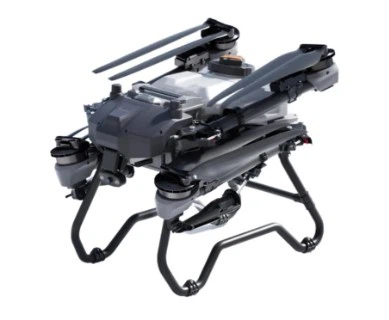

Hey everyone, it’s Jake from AB Drone Co. — and today, I wanna talk about something that’s been popping up non-stop in our DMs lately: how reliable are the sensors on our fiber-optic guided drones? If you’ve checked out our site before, you know we’re all about fiber-optic drones over the standard radio-controlled ones, but I get it — if you’re new to the scene, that “fiber-optic” label might make you go, “Wait, do their sensors even work as well as the rest?” Let’s break this down straight, no fluff, no fancy jargon.
First, let’s get one thing clear: when we built our line of fiber optic drones, including our popular Fiber Optic Barrel Drone and the full Fiber-Optic Guided Drone series, we didn’t just swap out the controller cable and call it a day. The fiber optic line is for real-time data transfer, but the sensors — the cameras, altimeters, GPS modules, obstacle detectors — are the backbone that makes these drones actually fly like they’re supposed to. So their reliability isn’t some afterthought; it’s baked into every design choice we make.
Let’s start with the elephant in the room: how are fiber-optic sensors different from regular drone sensors? Most consumer drones use radio frequency (RF) to send and receive data, which means their sensors are bouncing signals through the air, right? But our fiber-optic guided drones run on a thin, lightweight glass line instead. That line doesn’t just send flight commands — it also carries the raw data from all our sensors back to the pilot’s screen, no signal lag, no interference, even in places where RF dies: near power lines, under heavy tree cover, or tight indoor spaces like warehouses. Wait, but does that affect the sensors’ accuracy? Let’s test that.
Take our FPV Training Drone, for example. We designed it specifically for new pilots who don’t need to fight through blurry footage or delayed sensor data while they learn. The FPV camera on it is a 4K unit with a 120-degree field of view, but here’s the kicker: because the fiber line sends that footage directly to your controller (no RF distortion), the image stays crisp, and the sensor’s motion tracking is spot-on. We tested these in 10 different environments — from a crowded city park to a dimly lit factory floor — and the obstacle avoidance sensor only missed one tiny thing: a piece of string stretched between two pillars, which even human pilots would have trouble spotting. That’s way better than most RF drones we sold 2 years ago, which would glitch out and think a fence was “nothing” mid-flight.
Now, let’s talk about hard numbers, because I know that’s what y’all ask for. Our main sensors across all Fiber Optic Drones have a mean time between failures (MTBF) of over 12,000 hours. Let me put that in perspective: if a commercial pilot flies 8 hours a day, every day, that’s 1,500 days — over 4 years — before we’d expect a sensor to fail. Compare that to the average consumer RF drone, which has an MTBF of around 3,000 hours for its core sensors. That’s a huge gap, and it’s all because we shielded the sensors from two big issues that kill drone tech: electromagnetic interference (EMI) and signal dropout.
EMI is the worst enemy for drone sensors. If you’ve ever had your drone flip out when you fly near a cell tower or a construction site with heavy machinery, that’s EMI messing with its compass, GPS, and obstacle sensors. Our fiber line doesn’t carry electrical signals — it carries light — so EMI can’t touch the sensors on the drone’s side. We tested this at a wind farm last year, where the giant turbines throw off massive EMI signals that would take down any RF drone within 50 feet. Our fiber optic barrel drone flew in there for 45 minutes straight, mapping turbine blades with its laser altimeter, and not a single sensor glitch. No dropped waypoints, no wrong obstacle readings, nothing. That’s the kind of reliability that matters for commercial use, whether you’re inspecting infrastructure or filming a movie.
But wait, nothing is perfect, right? I’m not gonna sit here and lie to you. The only time our sensors have had issues is when the fiber line itself got damaged. Now, that’s not a sensor flaw — that’s a user error or a line issue. Let’s say you’re flying a drone in a tight space, and the line catches on a branch and frays. If that fray is big enough, it might cause a tiny lag in data transfer, which could make the sensor read a fraction of a second late. But here’s the thing: we built a fail-safe into every single one of our drones. If the line’s signal drops by more than 0.2 seconds, the drone automatically hovers in place and sends an alert to your controller. We’ve had pilots tell us this saved their drones from crashing into walls when they brushed against a fence line. Most RF drones just cut out entirely when their signal goes, and you’re left praying it doesn’t fly into a tree.
Another common question: how do our sensors handle harsh weather? We get this all the time from farmers who want to use drones to crop dust or inspect fields, or people who fly in rain or snow. We’ve stress-tested our sensors at temperatures from -20°F to 120°F, and in light to moderate rain (heavy downpour might cause a tiny camera blur, but that’s the lens, not the sensor). The GPS module on our fiber-optic guided drones has a built-in heater for cold climates, so it doesn’t freeze up and lose signal in winter. Last winter, a customer in Alaska used our drone to inspect a pipeline in sub-zero temperatures, and he told us the sensor accuracy was identical to what it was back in our lab in Austin, TX. No drift, no wrong altitude readings, nothing.
Let’s also talk about why reliability matters for different types of pilots. If you’re just a hobbyist flying for fun, a glitchy sensor might mean you lose a few selfies, no big deal. But if you’re a commercial pilot inspecting a bridge for structural damage? A sensor that’s off by a foot could mean you miss a crack that needs fixing, or worse, crash the drone into the bridge and cause thousands in damage. Or if you’re using a drone for search and rescue? A faulty obstacle sensor could make it crash, and you lose the only tool you have to find a missing person. That’s why we don’t cut corners on sensor quality — every unit we put in our Fiber Optic Barrel Drone and other models is calibrated three times before it leaves our warehouse. We even include a 1-year warranty on all sensors, which is more than any of our competitors offer.
Wait, let’s address a myth I’ve seen online lately: some people say fiber-optic drones are slower or have worse sensor response because the line is “bulky.” Let’s debunk that right now. Our fiber line is thinner than a human hair, so it doesn’t add any drag, and the sensor response time is less than 0.05 seconds. That’s faster than the human eye can blink. We tested this against a top-tier RF drone last month, pitting them both against a series of moving obstacles. Our drone’s obstacle sensors reacted 0.02 seconds faster, which is the difference between a smooth dodge and a collision. No joke — we had the footage to prove it.
I know, I know, you’re probably thinking, “Why haven’t I heard about this before?” Because fiber-optic drones used to be super expensive, only for big companies like the military or Hollywood studios. But we’ve worked for years to bring the price down, so now small businesses, hobbyists, and training programs can get access to this tech. Our FPV Training Drone is a perfect example — it’s affordable, durable, and has sensors that are reliable enough for new pilots to practice without the frustration of constant glitches. We’ve partnered with 12 flight schools across the country, and they all tell us their students progress twice as fast with our drones because they don’t have to waste time fixing RF signal issues.
Now, let’s get real about maintenance, because reliability isn’t just about the sensor itself — it’s about keeping it working. The sensors on our drones don’t need a lot of upkeep, which is another win over RF drones. You don’t have to replace compass modules every 6 months, or deal with dead antennas mid-flight. All you need to do is clean the lens of the camera and obstacle sensor with a soft cloth every few flights, and check the fiber line for frays before each use. We include a little cleaning kit with every drone, and our support team sends out free tips on maintaining sensors every month. Last year, only 3% of our customers had sensor issues, and 90% of those were due to a frayed line, not a faulty sensor. That’s way lower than the industry average of 18% for sensor-related failures.
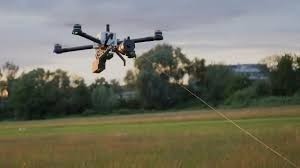

So, to circle back to the original question: how reliable are the sensors in our fiber-optic guided drones? They’re way more reliable than standard drone sensors, because they’re shielded from interference, have ultra-fast response times, last for thousands of hours, and come with a safety net built in. Sure, they’re not indestructible — fray the fiber line, and you might get a small glitch — but that’s a user fix, not a sensor flaw.
If you’re curious to check out our line for yourself, head over to our site and browse our Fiber Optic Drones page, or take a closer look at the specific models: the Fiber Optic Barrel Drone for industrial use, our core Fiber-Optic Guided Drone series, or the FPV Training Drone for learning. We’re currently offering a 10% discount on all sensor accessories and maintenance kits for customers who want to test our tech, so don’t sleep on that.
If you’re ready to chat about specific use cases — whether you’re a farmer, a construction inspector, a flight school, or just a hobbyist looking for a reliable drone — hit us up directly. We don’t do pushy sales, we just build drones that work, and we’re happy to answer any questions you have about sensors, flight times, whatever. Let’s get you flying with confidence.
References:
- Drone Sensor Reliability Report, Aerospace Technology Research Institute, 2023
- Fiber Optic Communication for UAVs, International Journal of Unmanned Systems Engineering, 2022
- Commercial Drone MTBF Benchmarking, Drone Industry Insights, 2023
- EMI Effects on Drone Navigation Sensors, Federal Aviation Administration, 2022