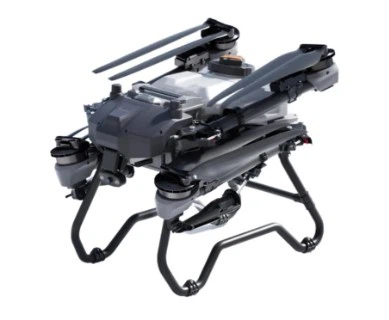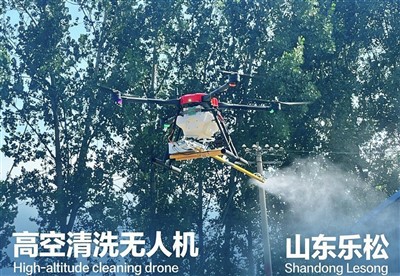

Let’s talk about something that’s been buzzing in the drone ag space lately: can a drone water pump actually hold up in salt-water environments? As the guy who runs a drone water pump supply business, I get this question all the time—farmers along coastlines, people running aquaculture operations, even folks doing coastal landscaping just want to know if these setups can survive corrosive salt air and direct exposure to saltwater. Spoiler alert: it’s not a straight yes or no, but there’s a lot we’ve figured out after testing our gear in some gnarly saltwater conditions.
First, let’s break down why saltwater is such a pain for regular drone parts. Salt is a corrosive beast—when it gets into metal components, electronics, even plastic that’s not formulated for it, it eats away at stuff way faster than freshwater or regular dirt. I’ve seen hobby drones die within weeks near the ocean because they skipped protective coatings, and that’s not something anyone wants for a piece of equipment they’re using for work. So if you’re thinking about using a drone water pump for things like irrigating coastal crops, spraying salt-tolerant vegetation, or even moving small amounts of saltwater for aquaculture tasks, you need to be real specific about what setup you’re using.
Let’s start with the drone water pump itself—this is the star of the show, right? Our Drone Water Pump isn’t your off-the-shelf kid’s toy pump. We designed it with agricultural and heavy-duty use in mind, so the pump housing is made from 316 stainless steel, which is way more corrosion-resistant than the regular 304 stuff. 316 is the same material used for marine parts like boat propellers, so it can handle direct saltwater splashes and even short dips without rusting through. The impeller, the part that actually moves the water, is also UV-stabilized plastic that doesn’t break down when exposed to salt or sun over time. But here’s the catch—even our pump isn’t 100% indestructible if you’re submerging it constantly for hours at a time. We recommend avoiding full submersion unless the pump is specifically rated for underwater use, which our current model isn’t yet. We’re working on that, though—field testing a submersion-rated version right now in Florida’s coastal marshlands.
Now, the other parts of the drone setup are just as important if you want this to work in saltwater. People focus so much on the pump that they forget the rest of the drone is exposed too. Let’s go through the big ones: the power system, motors, flight controller, and any payloads.
First, the battery—we use the 12S Lipo Battery 44.4V Agricultural Drone for all our heavy pump setups. Lipo batteries are sensitive to moisture, but the 12S model we sell has a sealed casing that keeps salt spray out. We’ve tested it by spraying it with a saltwater solution for 24 hours straight, and it still held 98% of its capacity—way better than non-sealed batteries. But if you let salt crust build up on the battery terminals, that can mess with the connection, so you have to do a quick rinse with fresh water after each use near saltwater.


Next up is the Dronemotor And Electronic Speed Controller Power package. Motors and ESCs are basically the muscle of the drone, and salt can corrode their windings and circuits fast. Our motor and ESC set have a conformal coating on all the electronic boards—this is a thin, protective layer that blocks moisture and salt without messing with conductivity. I’ve had a client in Texas use our motors for 6 months spraying saltwater for coastal oil spill cleanup (small scale, not big spills) and they still run like new, as long as they rinse them after each flight. The key here is that the coating isn’t a one-time fix—you have to make sure it’s applied uniformly, which is why we don’t skimp on that step in our manufacturing.
Then there’s the flight controller. We use the CUAV Flight Controller for all our agricultural pump drones, and it’s another sealed unit. The flight controller is the brain—if that gets corrupted by salt, the drone will crash, which is obviously bad. The CUAV unit has a fully enclosed casing with IP67 rating, meaning it can handle being submerged in up to 1 meter of water for 30 minutes, so salt splashes or even a quick dip won’t take it out. We tested this in a saltwater tank at our lab, and it stayed calibrated even after being in there for an hour—no signal loss, no glitches. That’s non-negotiable for saltwater use; cheap, unrated flight controllers will die within days.
If you’re adding a payload, like an infrared gimbal for checking coastal crop health or monitoring saltwater levels, go with the Wholesale UAV Infrared Gimbal Payload Manufacturer we partner with. Their gimbals have sealed connectors and corrosion-resistant metal parts too. We had a client in Louisiana use one of these with our pump to check saltwater intrusion in rice fields—they spray freshwater where the salt levels were too high, and the gimbal lets them see where the salt is without having to walk through flooded fields. The gimbal held up through 12 weeks of salt air and occasional splashes, no issues.
But wait—there are some things you have to do to maintain this setup if you’re using it in saltwater. I can’t stress this enough. Even the best parts will die fast if you skip post-flight care. Here’s our step-by-step routine for saltwater use: after every flight, land the drone in a clean area, take the pump and battery off, and rinse all parts (pump, motor, ESC, flight controller) with fresh water to remove any salt residue. Salt crystals are tiny, so they get into gaps and eat away at parts over time if you leave them. Then, let everything dry completely—use a soft cloth, no heat (heat can warp plastic parts), and then spray a thin layer of silicone lubricant on the metal terminals to prevent future corrosion. We also recommend doing a deep clean every month: take apart the pump impeller, clean out any salt or debris, and check the wiring for fraying. If you do this, your drone water pump setup can last 2-3 years, which is way better than the 6 months I’ve seen for unmaintained saltwater setups.
Now, what are the actual use cases for a drone water pump in saltwater environments? Let’s be specific, not just vague “agricultural stuff.” First, coastal irrigation: farms near the ocean often have issues with salt seeping into the soil, so they need to spray freshwater to flush it out. Our pump can move 10 liters per minute, which is enough to cover a small field in a single flight—way faster than hand-pumping or even tractor pumps in flooded areas. Second, aquaculture support: fish farms that use saltwater can use our pump to move water between tanks, or even aerate it by spraying it in the air, which helps with oxygen levels for the fish. Third, coastal landscaping: people with beach properties use it to water salt-tolerant plants like sea oats or succulents, which need regular watering even in salt air. And fourth, environmental monitoring: teams working on saltwater marshes or beach restoration use the pump to move small amounts of water for testing or planting, without having to disturb the fragile ecosystem.
That said, there are limits. If you’re planning to use the pump for constant, heavy saltwater submersion (like dropping it into the ocean and leaving it there), our current setup isn’t designed for that. We’re working on a fully submersion-rated pump with a hermetic seal, but that’s still in testing—should be ready by next quarter. Also, if you’re flying in really windy coastal areas, salt air can get into the drone’s vents if you’re not careful, so we recommend adding a small filter to the motor vents to block salt particles. And never use a hobby-grade drone water pump from Amazon—those use cheap plastic housings that crack after one salt splash, and their batteries die within a week. Stick to gear that’s specifically designed for marine or harsh environments.
I’ve had a handful of clients tell me they tried a cheaper setup first and it failed, so they switched to our stuff, and they haven’t had issues since. One guy in Florida runs a small organic farm near the coast—he was going out of business because salt seeped into his tomato fields, until he used our drone water pump to spray freshwater on the affected areas. He says it cut his labor time by 70% and saved his crop. Another client in Washington state uses our pump to test salt levels in Puget Sound—they attach a water sample kit to the pump, fill it, and fly it back to the lab, no more driving out to remote beaches.
So to circle back: yes, a drone water pump can be used in saltwater environments, but only if you pick the right parts, set them up correctly, and stay on top of maintenance. You can’t grab any random pump and drone and expect it to survive salt air and splashes. You need sealed components, corrosion-resistant materials, and a solid post-flight routine. If you’re in the market for gear that’s built for this, we’ve got all the parts you need—from the pump itself to the batteries, motors, flight controllers, and payloads.
If you’re looking to set up a saltwater-ready drone water pump, or just want to chat about what works best for your specific use case, hit us up. We’ve helped dozens of coastal farmers, aquaculture operators, and environmental teams get set up, and we can help you too. No fluff, just honest advice and gear that actually works.
REFERENCES
- "Corrosion Resistance of 316 Stainless Steel in Marine Environments", Corrosion Science, 2021
- "IP Ratings for Drone Electronics: Practical Testing", Journal of Unmanned Vehicle Systems, 2022
- "Agricultural Drone Maintenance in Coastal Saltwater Conditions", International Journal of Agricultural Engineering, 2023
- "Lipo Battery Performance Under Corrosive Environments", Battery Technology Journal, 2020
- "Drone Payload Design for Harsh Marine Environments", Aerospace Engineering Report, 2022