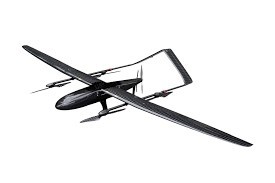


The 2-in-1 vertical takeoff and landing reconnaissance drone, usually referring to a composite wing drone, is a professional reconnaissance platform that integrates two flight modes: multi rotor and fixed wing. It perfectly combines the vertical takeoff and landing flexibility of helicopters with the long endurance and high-speed cruising advantages of fixed wing aircraft
Basic meaning
'2-in-1' specifically refers to its dual flight mode:
- Multi rotor mode: responsible for vertical takeoff and landing, low altitude hovering, and fine reconnaissance.
- Fixed wing mode: responsible for long-distance cruising, fast transition, and large-scale reconnaissance.
Vertical takeoff and landing "refers to the ability to take off directly from narrow spaces (rooftops, decks, mountains) without the need for a runway.
Reconnaissance "refers to its core mission: carrying payloads such as electro-optical/infrared pods and radars to perform intelligence, surveillance, and reconnaissance tasks.
Basic principles
Its working principle is divided into three stages:
Vertical takeoff and landing/hovering phase
- The principle is the same as that of multi rotor unmanned aerial vehicles.
- By relying on dedicated lift rotors (commonly 4/6/8 axes) to generate vertical lift, the attitude is controlled by adjusting the speed of each rotor.
- This stage has high energy consumption and is mainly used for takeoff, landing, and fixed-point observation.
Mode transition phase
- Automatic control of flight control system: gradually increase forward flight power and reduce lift rotor power.
- When the airspeed is sufficient, the aerodynamic lift generated by the fixed wings bears the weight of the aircraft, completing the transition from vertical to horizontal flight.
Horizontal cruising phase
- The principle is the same as that of a fixed wing aircraft.
- The lift rotor stops or locks, driven by a horizontal propeller and relying on the wings to generate lift.
- Aerodynamic efficiency is extremely high, with long endurance, fast flight speed, and wide coverage.
Core technical features
Composite pneumatic layout
- The fuselage is equipped with wings (fixed wings) and multiple sets of vertical lift rotors (multi rotors).
- Common types: tiltrotor/ducted, lift rotor+fixed thrust, tail mounted.
Dual-mode flight control system
- The core technology requires precise calculation and smooth switching between two flight modes.
- Equipped with high intelligence functions such as autonomous takeoff and landing, route planning, fault redundancy, and automatic return.
Performance Advantage
Flexible takeoff and landing:
Not limited by the site, highly adaptable to complex environments.
01
Flight duration:
High cruising efficiency, typically 3-5 times longer than a pure multi rotor aircraft.
02
Fast speed:
Cruise speed far exceeds multi rotor, quickly reaching the mission area.
03
Strong payload capacity:
Capable of carrying professional reconnaissance equipment such as high-definition electro-optical, infrared, and LiDAR.
04
High homework efficiency:
Single point hovering for detailed inspection+large-scale rapid inspection, one machine for multiple uses.
05
Application scope
1. Military and Defense
- Frontline tactical reconnaissance, border patrol, and battlefield damage assessment.
- Ship based reconnaissance (no need for ejection/interception).
- Special forces infiltration, target positioning, and communication relay.
2. Public safety and emergency response
- Fire detection and search and rescue (mountainous/water areas)
- Counter terrorism and emergency response, security for large-scale events, and traffic monitoring.
- Disaster assessment (earthquakes, floods, typhoons)
3. Industry inspection and surveying
- Inspection of long-distance power/oil and gas pipelines.
- National land surveying, forestry inspection, and water conservancy monitoring
- Smart city, environmental monitoring (pollution discharge/straw burning).
4. Oceans and Maritime Affairs
- Coast Guard, Fishery Law Enforcement, Anti Smuggling.
- Marine environment monitoring and island patrol.
Hot Tags: the 2in1 vertical take-off reconnaissance uav, China the 2in1 vertical take-off reconnaissance uav manufacturers, factory, Vtol Fixed Wing Drone, Long Range Fixed Wing Drone, The 2in1 Vertical Take off Reconnaissance UAV, Fixed Wing Aircraft Dron, fixed wing drone, High Altitude Fixed Wing Drone