


In recent years, the application of drones in various fields has been expanding rapidly. Among them, the Fiber Optic Barrel Drone has emerged as a promising technology with unique capabilities. As a supplier of Fiber Optic Barrel Drones, I often receive inquiries about its potential use in flood monitoring. In this blog, I will explore whether a Fiber Optic Barrel Drone can be effectively used for flood monitoring, considering its features, advantages, and limitations.
Understanding the Fiber Optic Barrel Drone
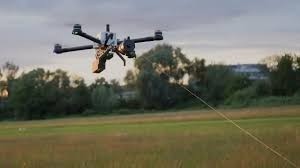
The Fiber Optic Barrel Drone is a type of Fiber Optic Drones that combines the benefits of fiber - optic technology with the mobility of a drone. It is equipped with a fiber - optic cable that connects the drone to a ground station. This cable provides a high - speed, reliable data link, allowing for real - time transmission of data from the drone's sensors to the ground.
The design of the Fiber Optic Barrel Drone typically includes a barrel - shaped structure that houses the fiber - optic spool and other essential components. This design ensures that the fiber - optic cable can be smoothly unwound as the drone flies, without getting tangled. The drone is also equipped with various sensors, such as cameras, LiDAR (Light Detection and Ranging), and water level sensors, which can collect data related to the flood situation.
Advantages of Using a Fiber Optic Barrel Drone for Flood Monitoring
Real - Time Data Transmission
One of the most significant advantages of the Fiber Optic Barrel Drone is its ability to provide real - time data transmission. The fiber - optic cable offers a much higher bandwidth compared to traditional wireless communication methods. This means that high - resolution images, videos, and sensor data can be transmitted to the ground station instantaneously. During a flood event, real - time data is crucial for emergency responders to make informed decisions. For example, they can quickly assess the extent of the flood, identify areas at high risk of inundation, and plan evacuation routes accordingly.
High - Precision Mapping
The Fiber Optic Barrel Drone can be equipped with LiDAR sensors, which can create highly accurate 3D maps of the flooded area. LiDAR technology works by emitting laser pulses and measuring the time it takes for the pulses to bounce back from objects. This allows for the creation of detailed elevation models, which can be used to determine the depth of the floodwater, the location of flood - prone areas, and the impact on infrastructure. These high - precision maps can be invaluable for flood management and mitigation efforts.
Long - Range Operation
The fiber - optic cable provides a reliable connection over long distances. Unlike wireless drones, which are often limited by signal strength and interference, the Fiber Optic Barrel Drone can operate at a greater distance from the ground station. This is particularly useful in large - scale flood events, where the affected area may cover a wide geographical region. The drone can fly over remote areas and collect data without the risk of losing the connection, ensuring continuous monitoring of the flood situation.
Resistance to Interference
Fiber - optic communication is highly resistant to electromagnetic interference. In a flood environment, there may be a lot of electrical equipment and power lines, which can cause interference with wireless signals. The fiber - optic cable used in the Fiber Optic Barrel Drone is immune to such interference, ensuring a stable and reliable data link. This makes the drone more suitable for flood monitoring, where the accuracy of data transmission is crucial.
Limitations of Using a Fiber Optic Barrel Drone for Flood Monitoring
Limited Mobility
The presence of the fiber - optic cable restricts the mobility of the Fiber Optic Barrel Drone to some extent. The drone needs to be flown in a way that avoids tangling the cable, which may limit its ability to reach certain areas. For example, in a complex urban environment with many obstacles, it may be difficult for the drone to maneuver freely while keeping the cable untangled.
Weather Conditions
Adverse weather conditions, such as strong winds, heavy rain, or fog, can affect the performance of the Fiber Optic Barrel Drone. Strong winds can cause the drone to drift, making it difficult to maintain a stable flight and control the cable. Heavy rain or fog can reduce the visibility of the drone's cameras and sensors, affecting the quality of the data collected.
Cost
The Fiber Optic Barrel Drone is generally more expensive than traditional drones. The cost of the fiber - optic cable, the spooling mechanism, and the specialized sensors adds to the overall cost of the system. This may be a deterrent for some organizations or agencies with limited budgets.

Practical Applications of Fiber Optic Barrel Drones in Flood Monitoring
Initial Assessment
During the early stages of a flood event, the Fiber Optic Barrel Drone can be deployed to quickly assess the situation. It can fly over the affected area and provide real - time images and data on the extent of the flood, the location of water bodies, and the impact on infrastructure. This information can be used to prioritize rescue and relief efforts.
Continuous Monitoring
The drone can be used for continuous monitoring of the flood situation over an extended period. By collecting data at regular intervals, it can track the movement of the floodwater, the changes in water levels, and the impact on the environment. This information can be used to predict the future development of the flood and adjust the response strategies accordingly.
Damage Assessment
After the flood has receded, the Fiber Optic Barrel Drone can be used to assess the damage caused by the flood. It can capture high - resolution images of the affected areas, which can be used to identify damaged buildings, roads, and other infrastructure. This information can be used for post - flood recovery and reconstruction planning.
Conclusion
In conclusion, the Fiber Optic Barrel Drone has significant potential for use in flood monitoring. Its real - time data transmission, high - precision mapping, long - range operation, and resistance to interference make it a valuable tool for flood management. However, it also has some limitations, such as limited mobility, susceptibility to weather conditions, and high cost.
Despite these limitations, the benefits of using a Fiber Optic Barrel Drone in flood monitoring outweigh the drawbacks. With proper planning and operation, it can provide accurate and timely information that is essential for effective flood response and mitigation.
If you are interested in learning more about our Fiber Optic Barrel Drones or are considering purchasing them for flood monitoring or other applications, please feel free to contact us for a detailed discussion. We are committed to providing high - quality products and excellent customer service.
References
- Fiber - Optic Guided Drone
- FPV Training Drone
- Academic research on the application of drones in environmental monitoring
- Industry reports on the development of fiber - optic drone technology


