Wide Application of FPV Drones and Fiber-Optic Drones Drives UAV Industry Upgrade
In recent years, FPV drones and fiber-optic guided drones have been widely used in civilian and special fields, promoting the rapid upgrading of the global drone industry.
Traditional wireless FPV drones adopt wireless signal transmission, featuring flexible flight, fast speed and immersive first-person flight vision. They are widely applied in aerial photography, drone racing, power inspection, forest fire prevention and daily emergency rescue. However, they have obvious defects: wireless signals are vulnerable to electromagnetic interference and signal jamming, which leads to flight failure and signal loss easily in complex environments.
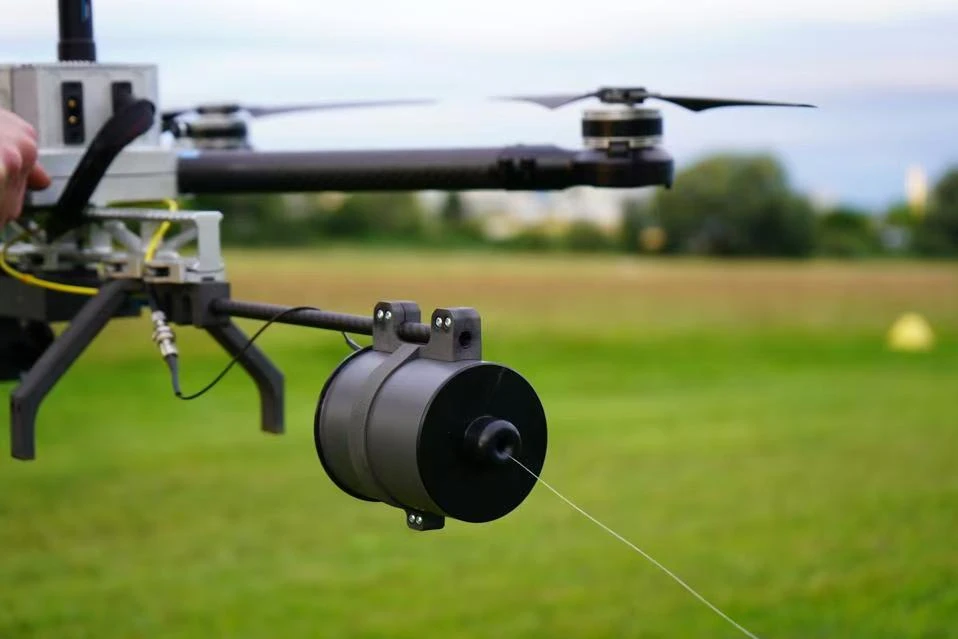
To solve this problem, fiber-optic drones have become a new development trend. Different from wireless drones, fiber-optic drones transmit control signals and high-definition images through optical fibers. They are completely free from radio frequency interference, with ultra-stable signal and nearly zero delay.
With outstanding anti-jamming performance, fiber-optic drones perform excellently in complex scenarios such as urban tunnel operations, high-electromagnetic interference workshops and special tactical missions.
Industry experts said that common wireless FPV drones are suitable for daily civil scenarios with low cost, while fiber-optic drones make up for the shortcomings of wireless drones. In the future, dual-mode drones combining wireless and optical fiber will become the mainstream direction of the industry, further expanding the application boundary of unmanned aerial vehicles.